
Air Cooling System
WHAT MAKES US THE BEST INDUSTRIAL AIR COOLING MANUFACTURERS?
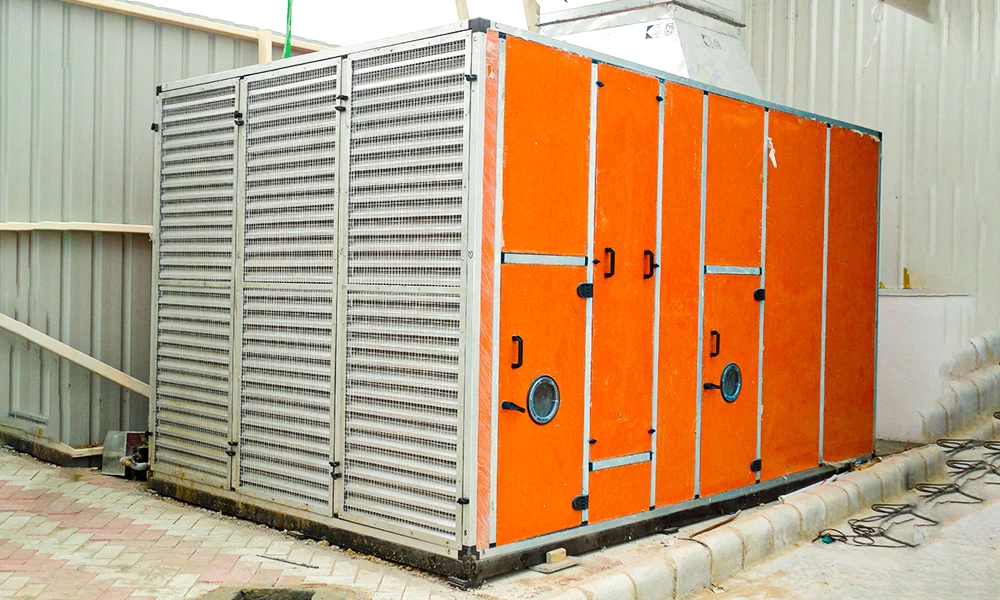
An industrial air cooling system regulates temperature and improves air quality across large industrial and commercial spaces. It draws fresh air from outside, cools it through high-efficiency cooling pads or coils, and distributes the cooled air evenly throughout the area. This continuous process creates a comfortable environment, reduces heat stress, and helps employees maintain consistent productivity.
A well-engineered industrial cooling system also protects machinery from overheating and helps maintain safe working conditions. Manufacturers build these systems with durable MS, SS, or GI materials to support continuous operation and long service life. Industries widely use these systems in factories, warehouses, workshops, and other large spaces where effective airflow and temperature control play an essential role in maintaining efficient and reliable operations.
WHAT ARE THE TECHNICAL SPECIFICATIONS OF OUR AIR COOLING SYSTEM?
- Airflow Capacity: 1,000 – 50,000 CFM (customizable)
- Material: MS / SS / GI
- Construction Type: Single Skin / Double Skin
- Cooling Media: Honeycomb / Cellulose Pads
- Drive Options:Direct Drive / Belt Drive
- Power Supply: Electrical
- Mounting Type : Floor Mounted / Duct Mounted
- Origin: Made in India
WHAT MAKES OUR INDUSTRIAL AIR COOLING SYSTEM HIGH-PERFORMING?
- High-efficiency cooling with low power consumption
- Uniform air distribution for maximum comfort
- Available in modular, compact, and customized designs
- Easy installation, operation, and maintenance
- Durable construction for long service life
- Eco-friendly & cost-effective compared to conventional AC systems
WHO CAN BENEFIT FROM OUR INDUSTRIAL AIR COOLING SYSTEMS?
- Industrial Workshops & Factories
- Warehouses & Storage Facilities
- Commercial Kitchens & Food Processing Units
- Textile Mills & Printing Units
- Schools, Auditoriums & Large Halls
- Agricultural & Greenhouse Applications
Frequently Ask Questions
It cools large industrial and commercial spaces by drawing in fresh air, reducing its temperature, and distributing the cooled air throughout the facility. It helps control heat, improve air circulation, and create a more comfortable working environment.
The system draws fresh air from outside and passes it through cooling pads or coils. The cooling process lowers the air temperature before fans distribute the cooled air across the required area. Proper airflow helps maintain consistent cooling throughout the space.
Industries can use these systems in factories, manufacturing plants, warehouses, workshops, production units, garages, and other large spaces. They work especially well in areas that generate high levels of heat and require continuous air circulation.
Yes. It reduces heat by supplying a continuous flow of cooled air. It helps lower the temperature in hot work areas, improves worker comfort, and supports better productivity during long working hours.
Yes. They can cool large areas and support continuous operation. Manufacturers can select the cooling capacity, airflow, and number of units according to the size, layout, heat load, and ventilation requirements of the factory.
They can provide energy-efficient cooling compared with many conventional cooling methods. Energy-efficient motors, variable-speed controls, and optimized airflow can help reduce power consumption while maintaining effective cooling performance.
They work best in spaces with proper ventilation. They require fresh air intake and adequate air outlets to remove warm air and maintain continuous airflow. Closed spaces may require additional ventilation for effective cooling.
Yes. We can develop cooling solutions based on your facility’s size, heat load, airflow requirements, layout, operating conditions, and application. We can recommend suitable cooling capacity and system configurations for different industrial environments.
Consider the area size, heat generated by machinery, number of workers, ventilation, required airflow, operating hours, and local climate. A professional assessment can help determine the appropriate cooling capacity and system configuration for your facility.
Regular maintenance helps maintain cooling performance and extend system life. Clean the cooling pads, filters, fans, and water circulation components at suitable intervals. The exact maintenance schedule depends on operating hours, water quality, dust levels, and the industrial environment.