

When Should You Use An Industrial Air Blower Instead Of A Fan?
Do you deal with heat dust or fumes in a busy work area and wonder if a fan is enough? In factories warehouses and job sites air control affects safety comfort and workflow.
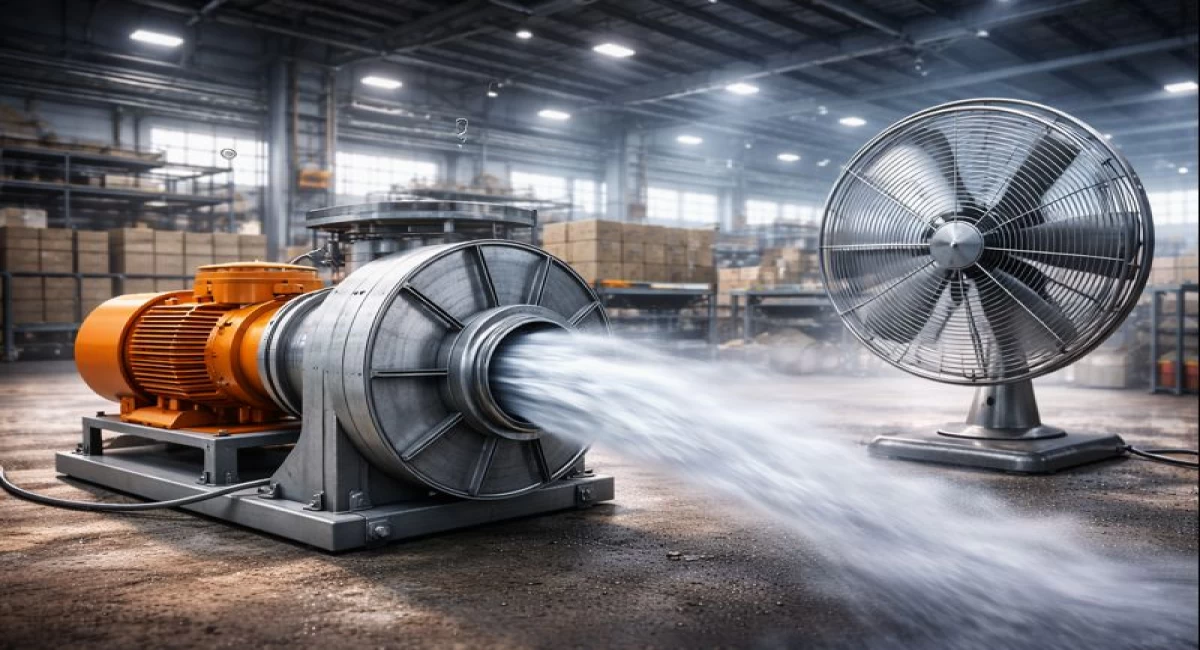
A standard fan moves air nearby but an industrial air blower pushes large volumes across long distances.
This difference matters when drying floors clearing smoke or cooling machines. Choosing the right tool can save time reduce downtime and protect equipment.
This article explains when industrial air blowers fit the job better than a fan so you can choose with confidence.
High Air Volume
Large industrial spaces need strong airflow to manage heat dust and fumes. A small fan can only move air close to its position. An industrial air blower pushes much more air across wide areas. This helps move stale air out and bring fresh air in faster.
In factories warehouses or plants machines people and materials all add heat. High air volume supports safer working conditions and better control of the space. When airflow must reach far corners or high ceilings a blower fits this need better than a fan.
Long Distance Airflow
Some work areas need air to move far from the source. A standard fan spreads air in a short range and loses force quickly. An industrial air blower sends air in a focused direction over long distances.
This works well in tunnels large halls or long production lines. It allows fresh air to reach areas that feel stuffy or hot. When airflow must travel across wide floors or down long paths a blower gives better reach than a fan.
Faster Drying
Drying time matters in many work settings. Spills wet floors or fresh paint can slow work and raise risk. A regular fan moves air slowly and only covers a small area. An industrial air blower pushes strong airflow across the surface.
This speeds up evaporation and clears moisture faster. It works well after cleaning leaks or wash downs. In large spaces a blower reduces waiting time so work can resume sooner and the area stays safer for workers and equipment.
Smoke And Fumes
Smoke and fumes can build up fast during industrial tasks. Welding cutting or chemical work often releases thick air. A standard fan may just spread the smoke around.
An industrial air blower moves it out of the area in one clear direction. This helps clear the space faster and supports cleaner breathing air. In enclosed or semi closed areas controlled airflow matters.
Machine Cooling
Industrial machines often produce a lot of heat during use. If heat stays trapped parts can wear faster or shut down. A normal fan cools only a small zone. An industrial air blower sends strong airflow directly toward hot surfaces.
This helps move heat away from motors panels or belts. In factories where machines run for long hours steady cooling supports smoother operation.
Industrial Settings
Industrial air blowers suit harsh work environments where airflow demands are high. Factories warehouses and construction sites often have dust heat and heavy equipment. A basic fan may not handle these conditions well.
An industrial air blower is built for rough use and steady operation. It can run for long periods without strain. These spaces also need airflow that reaches wide open zones.
Focused Airflow
Some tasks need air to move in one clear path. A fan spreads air in many directions which can reduce control. An industrial air blower sends airflow exactly where it is needed. This works well for clearing dust from a work line or drying a specific surface.
Focused airflow also limits air waste in other areas. In job sites where precision matters a blower gives better direction. When air must stay controlled and targeted a blower suits the task more than a fan.
Fan Limits
Standard fans work well for light airflow needs but they have limits. They move air slowly and lose strength over distance. In large or dusty areas this can cause air to stay trapped. Fans also struggle in hot zones or where machines block airflow.
They are not built for heavy use or rough handling just like heavy duty industrial blowers. When work conditions demand steady airflow across wide spaces these limits become clear.
FAQS
What is an industrial air blower?
An industrial air blower is a powerful machine that moves air with high force. It is designed for heavy-duty and professional use.
How is an air blower different from a fan?
A blower pushes air in a strong, focused stream. A fan moves air in a wider and gentler way.
When should you use an industrial air blower instead of a fan?
Use a blower when you need strong airflow, fast drying, or to move air over long distances.
Are industrial air blowers better for drying wet areas?
Yes. Air blowers dry floors, carpets, and equipment much faster than fans.
Can air blowers be used in industrial or construction sites?
Yes. They are ideal for factories, warehouses, workshops, and construction areas where strong airflow is needed.
Are air blowers suitable for dust and debris removal?
Yes. Blowers can push away dust, dirt, and light debris, which fans cannot do effectively.
Should you use a blower for ventilation in enclosed spaces?
Yes. Air blowers help remove hot air, fumes, or moisture from closed or poorly ventilated spaces.