
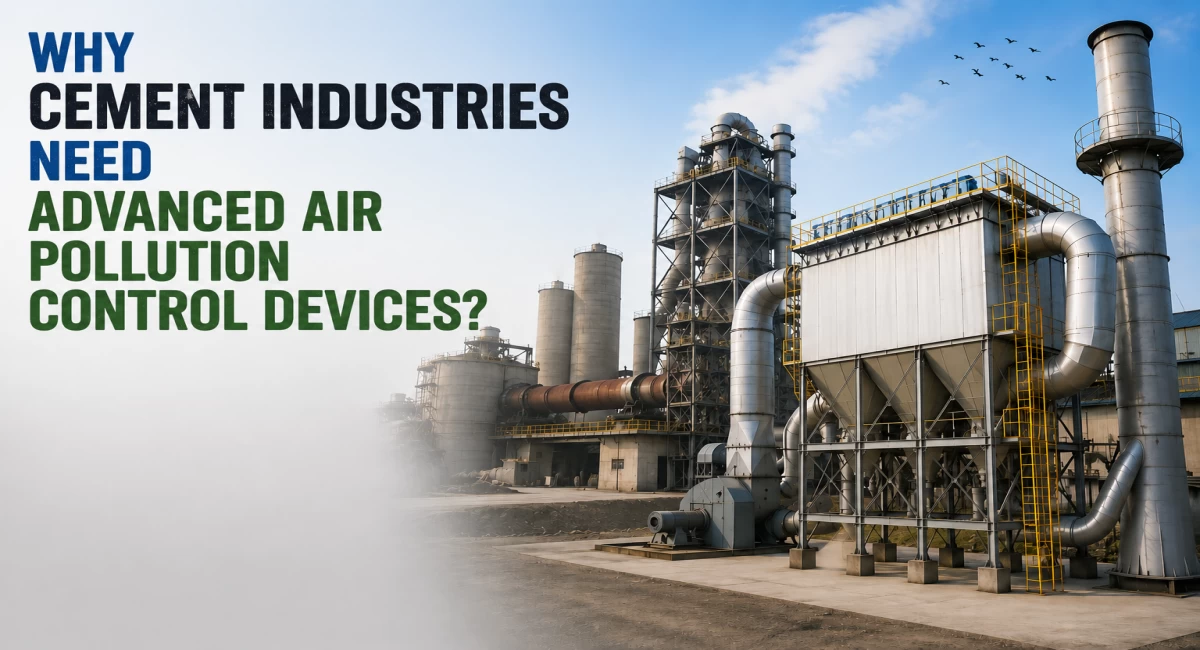
Why Cement Industries Need Advanced Air Pollution Control Devices?
Have you noticed how industries today face much stricter environmental expectations than they did a few decades ago? Cement production remains essential for roads, buildings, bridges, and infrastructure, but it also raises an important question. How can cement plants continue production while reducing their impact on air quality?
The answer lies in advanced air pollution control devices. These systems by APCD device manufacturers help cement industries capture dust, reduce harmful emissions, and maintain cleaner air around production facilities.
They work by filtering, collecting, and controlling pollutants generated during different stages of cement manufacturing.
Air pollution control is no longer just an environmental concern. It has become a critical part of sustainable industrial operations. Governments, communities, employees, and customers all expect industries to reduce emissions and operate responsibly.
How Advanced Air Pollution Control Devices Work in Cement Plants?
Many readers wonder what these systems actually do inside a cement facility.
Air pollution control devices capture dust and pollutants from process equipment before they enter the atmosphere. Common technologies include bag filters, electrostatic precipitators, cyclones, and advanced dust collection systems.
These systems pull contaminated air through specialized filtration equipment. The filters capture dust particles while allowing cleaner air to exit the system.
The result is lower emissions, improved workplace air quality, and better environmental performance across the facility.
Reasons Cement Industries Need Advanced Air Pollution Control Devices
Reduce Dust Emissions From Production Processes
Cement manufacturing generates large amounts of dust during crushing, grinding, material handling, and packaging.
Without proper control systems, this dust can spread throughout the facility and surrounding areas. They capture fine particles before they enter the atmosphere.
This helps maintain cleaner air and reduces environmental impact. It also creates a healthier workplace for employees who work near production equipment.
Meet Environmental Regulations and Standards
Governments worldwide continue to tighten emission standards for industrial facilities.
Cement plants must comply with limits for particulate matter and other pollutants. Failure to meet these requirements can result in penalties, operational restrictions, or reputational damage.
They help plants consistently meet environmental standards. This supports long-term business continuity and regulatory compliance.
Improve Worker Health and Safety
Employees in cement plants often work near dust-generating operations.
Excessive dust exposure can create health concerns over time. Cleaner air inside production facilities helps improve workplace conditions and supports employee well-being.
The thing is, healthier work environments often lead to better productivity and higher employee satisfaction. Workers can focus more effectively when air quality improves.
Enhance Community Relations
Communities expect industries to operate responsibly and minimize environmental impact.
Visible dust emissions can create concerns among nearby residents. People naturally pay attention to air quality and environmental performance.
They demonstrate a company's commitment to environmental responsibility. This helps build trust and maintain positive relationships with surrounding communities.
Increase Equipment Efficiency
Dust does not only affect the environment. It can also affect machinery and production systems.
When dust accumulates on equipment, it may contribute to wear, reduced efficiency, and additional maintenance requirements. Advanced filtration systems help control airborne particles within the facility.
As a result, equipment often operates more efficiently and maintenance teams spend less time dealing with dust-related issues.
Support Sustainable Manufacturing Goals
Sustainability has become a major focus across industrial sectors.
Many cement manufacturers have established environmental targets to reduce emissions and improve operational performance. They help support these objectives.
Cleaner production processes allow companies to align their operations with sustainability goals while maintaining production capacity.
Recover Valuable Materials
One benefit that people often overlook is material recovery.
Dust collected by pollution control systems may contain valuable cement particles or raw materials. Instead of losing these materials to the atmosphere, plants can often recover and reuse them within production processes.
This approach helps reduce waste and improve resource utilization across the facility.
Improve Corporate Reputation
Environmental performance influences how customers, investors, regulators, and communities view a company.
Businesses that actively reduce emissions often gain stronger public confidence. Environmental responsibility has become an important factor in modern industrial operations.
They demonstrate that a company takes environmental stewardship seriously. This can strengthen brand reputation and support long-term growth.
Reduce Long-Term Operating Costs
Some companies focus only on the initial cost of pollution control equipment. But here is the catch. The long-term benefits often outweigh the upfront expense.
Efficient dust collection systems can reduce product loss, lower maintenance costs, and improve operational performance. They can also help avoid regulatory penalties and compliance issues.
Prepare for Future Environmental Requirements
Environmental regulations continue to evolve.
What meets today's standards may not satisfy future requirements. Cement plants that adopt these now place themselves in a stronger position for future compliance.
Modern systems often include improved filtration technology, automation features, and monitoring capabilities. This helps facilities adapt more easily as environmental expectations change.
Last Words
Cement production remains essential for modern infrastructure, but it also creates significant air pollution challenges. Advanced air pollution control devices and dust extraction systems help industries reduce dust emissions, improve air quality, and meet environmental standards. These systems support worker safety, protect nearby communities, improve operational efficiency, and contribute to sustainability goals. They also help businesses prepare for future regulations and strengthen their environmental reputation.