

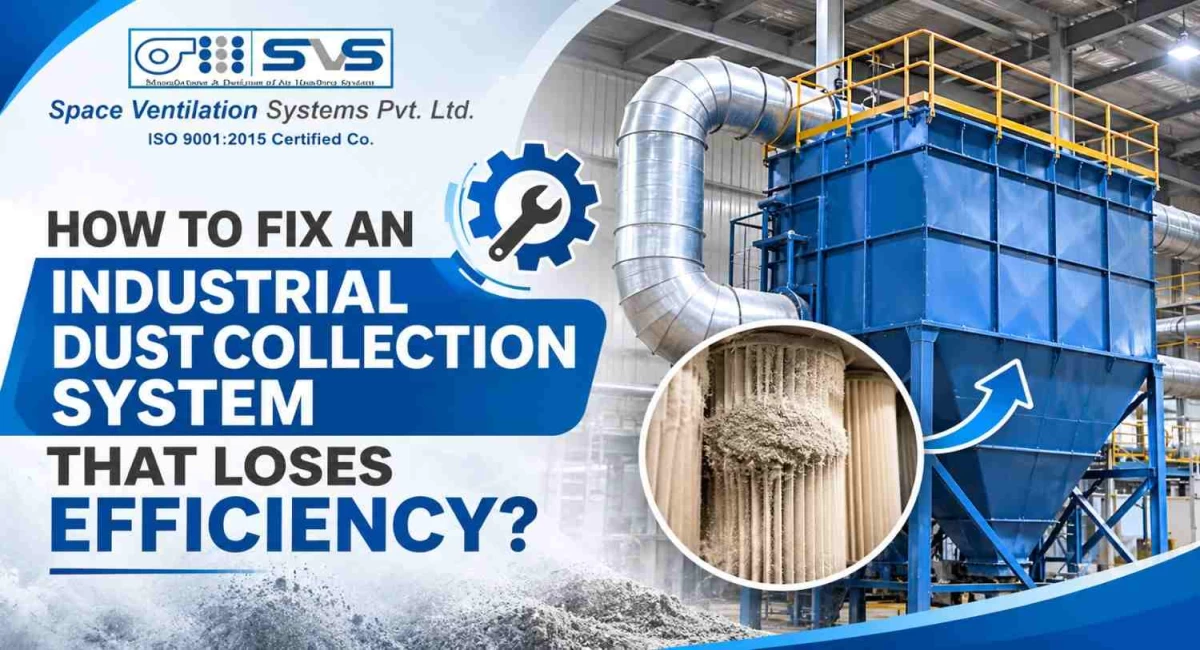
How To Fix An Industrial Dust Collection System That Loses Efficiency?
Quick Highlights
- Check filters regularly for dust collection and damage.
- Inspect ducts and joints for air leaks.
- Monitor pressure readings to identify filter blockages.
- Repair fan, motor, and dust discharge faults.
- Follow a fixed schedule for system maintenance.
- Match collection capacity with current production needs.
Is your industrial dust collection system removing less dust than before? Is dust spreading across your workplace? Does the system have less airflow than usual? These signs may mean that your system needs attention.
What does an industrial dust collection system do?
It removes dust and small particles from the air during manufacturing and other industrial activities. It helps keep work areas clean and protects machines from dust build-up. However, its performance can drop over time due to blocked filters, air leaks, worn parts, or poor maintenance.
A weak system can affect production, worker safety, and equipment performance. It can also increase energy use and maintenance costs.
So, what causes this problem, and how can you fix it?
Let's look at the common reasons and practical steps that can help restore proper industrial dust collector systems performance.
What Causes an Industrial Dust Collection System to Lose Efficiency?
It usually loses efficiency because of restricted airflow, damaged parts, or poor maintenance.
Some common causes include -
Blocked dust filters - Dust particles collect on filter surfaces over time. A thick layer of dust can restrict airflow and reduce suction.
Damaged filter bags or cartridges -Small holes, cracks, or loose seals can allow dust to pass through. This reduces dust removal and can release particles back into the workplace.
Air leakage - Loose joints, damaged ducts, and poorly sealed connections allow air to escape. This can reduce the suction available at collection points.
Poor airflow balance - Incorrect duct sizes or unsuitable airflow settings can affect dust collection at different workstations.
Faulty fans or motors - A worn fan, damaged motor, or loose belt can reduce the air pressure needed to move dust.
Dust collection inside ducts - It can settle inside pipes and restrict the movement of air. This problem can become serious when the system handles heavy dust loads.
Incorrect system operation - Running equipment outside its designed capacity can affect its performance.
How Can You Check an Industrial Dust Collection System?
Start with a basic inspection of the filters, ducts, fan, motor, and dust discharge unit.
Follow these inspection steps -
- Look for weak suction at dust collection points. Compare the airflow with the system's normal operating level.
- Check for heavy dust build-up, holes, tears, and loose seals. Replace damaged filters when cleaning cannot restore their condition.
- Look for visible dust deposits, loose joints, cracks, and damaged connections. Pay attention to bends and sections where dust can collect.
- Listen for unusual sounds and look for excessive vibration. Also inspect belts, bearings, and other moving parts.
- Check if the collected dust leaves the hopper properly. A blocked discharge valve can cause dust to build up inside the collector.
- Check the pressure difference across the filters. A higher reading than the manufacturer's recommended range may indicate filter blockage.
How Can You Fix Common Dust Collection System Problems?
The correct repair depends on the cause of poor performance. Do not replace parts without checking the actual fault first. A proper inspection can help prevent unnecessary repairs.
Use these practical solutions for common problems -
Follow the manufacturer's cleaning instructions. Use the installed filter cleaning system, such as pulse-jet cleaning, if the unit has one.
Check duct joints, flexible connections, access doors, and inspection covers. Tighten loose connections and replace damaged seals.
Clean blocked sections with suitable industrial cleaning equipment. Check bends and horizontal duct sections for heavy deposits.
Inspect the fan blades, motor, bearings, and drive belts. Replace worn components as required.
Check dampers, duct connections, and airflow settings. Adjust them according to the system design.
Inspect rotary airlocks, valves, and hopper outlets. Remove blockages and repair faulty parts.
How Can Regular Maintenance Prevent Efficiency Loss?
It helps an industrial dust collection system work at its designed performance level. It also allows operators to find small faults before they cause larger problems.
A suitable maintenance plan should cover these tasks -
Daily checks - Look for unusual noise, visible dust leaks, weak suction, and problems with dust discharge.
Weekly checks - Inspect accessible duct connections, filter cleaning equipment, and pressure readings. Remove dust from suitable external surfaces.
Monthly checks - Examine fan belts, bearings, motors, dampers, and electrical connections. Check for signs of wear or loose parts.
Scheduled filter checks - Inspect filters according to their type, dust load, and operating conditions. Clean or replace them as recommended by the manufacturer.
Periodic duct inspection - Check the internal condition of ducts and look for dust deposits, corrosion, or damage.
Performance checks - Record airflow, pressure difference, fan speed, and other available operating readings.
When Should You Repair or Replace Your Dust Collection System?
You should repair the system when a specific component causes the problem and the remaining equipment works within its design limits. Replacement may be necessary when repeated faults affect the system's basic performance.
Consider these points before you plan -
- Repair the system if the problem comes from worn belts, damaged seals, blocked filters, or minor duct leaks.
- Replace individual component if the fan, motor, filter bags, or other parts have reached the end of their useful life.
- Review the system capacity if production has increased or the type of dust has changed.
- Consider a system upgrade if the existing unit cannot meet current dust collection needs.
- Check repair costs if the system needs frequent repairs or suffers repeated breakdowns.
Final Thoughts
An industrial pulse jet dust collector system can lose efficiency due to blocked filters, air leaks, damaged fans, and duct problems. Regular inspections help identify these faults early. Clean or replace damaged parts and check airflow levels. Follow a planned maintenance schedule to keep the system working properly. Act quickly when performance drops.