

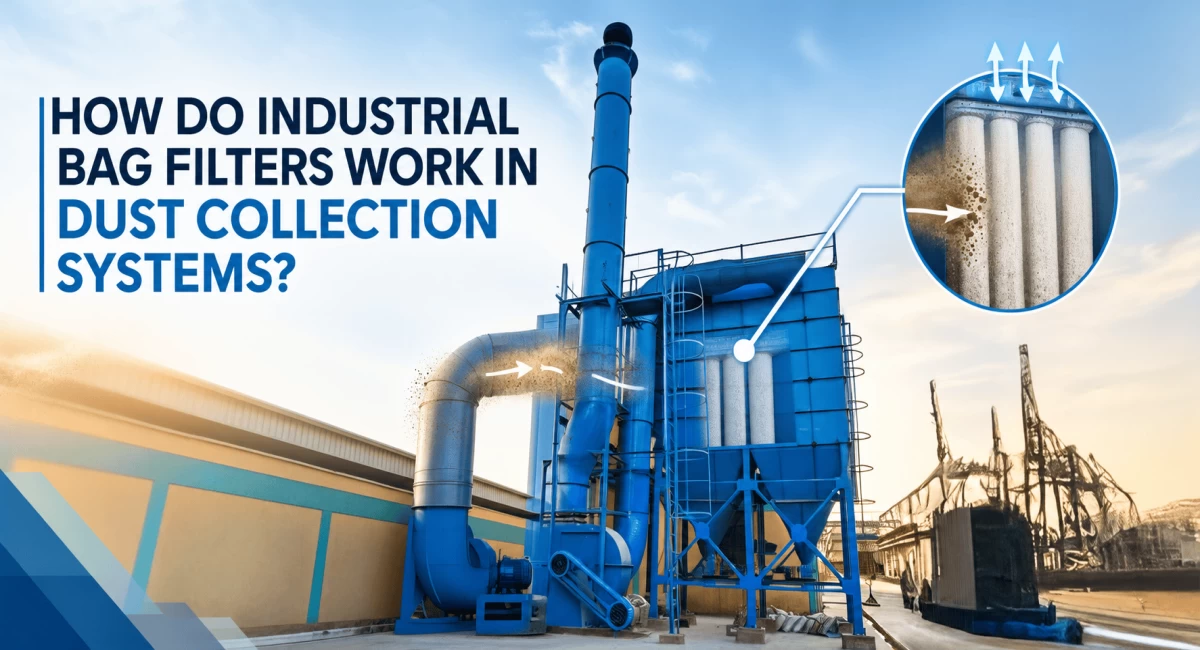
How Do Industrial Bag Filters Work In Dust Collection Systems?
Quick Highlights
- Industrial bag filters separate dust from air through fabric bags.
- Filter bags need suitable material for process conditions.
- Pulse jet systems clean bags with short compressed air pulses.
- Proper airflow supports effective dust collection at source.
- Pressure drop helps identify filter and airflow problems.
- Regular maintenance protects bags and supports steady operation.
Do you want to know how industrial bag filters remove dust from factory air? Industrial bag filters play a key role in dust collection systems. They capture dust particles from process air before the cleaned air leaves the system. Their design helps factories control airborne dust from production processes.
We are one of the best bag filter manufacturers and will explain you how industrial bag filters work, what parts they use, how the filtration process happens, and what affects their performance. It also covers common dust collection uses, filter cleaning methods, and basic maintenance needs.
What Are Industrial Bag Filters?
They are dust collection units that use fabric filter bags to remove dust from air. A fan pulls dusty air into the collector. The air passes through the filter bags.
The collected dust forms a layer on the outside or inside of the bags. The exact arrangement depends on the bag filter design.
They can handle dust from different production processes. Common applications include cement plants, steel plants, chemical units, food processing plants, power plants, and material handling systems.
How Do Industrial Bag Filters Work?
They work through a simple air filtration process. Dusty air enters the collector, passes through fabric bags, and leaves as cleaner air.
The basic process follows these steps:
Dusty air enters the bag filter housing.
A connected duct carries dust-filled air from the production area. The fan creates the airflow needed to move this air toward the collector.
The air reaches the filter bags.
The collector contains several fabric bags. These bags provide a large filtration area inside a compact unit.
Dust stays on the filter surface.
The fabric allows air to pass through. Dust particles cannot pass through the fabric as easily. The particles collect on the bag surface.
Clean air moves toward the outlet.
After filtration, cleaner air travels into the clean air section. The system then directs the air toward the outlet or another treatment stage.
The system removes collected dust.
The dust layer must leave the bags at regular intervals. A cleaning system removes this dust and sends it into a hopper or discharge arrangement.
What Parts Make Up a Bag Filter System?
It has several parts. Each part supports a specific stage of dust collection.
Filter Bags
They act as the main filtration surface. Manufacturers select the fabric based on dust type, temperature, chemical exposure, and operating conditions.
Bag Filter Housing
The housing holds the filter bags and other internal parts. It also separates the dirty air area from the clean air area.
Dust Hopper
The hopper collects dust that falls from the filter bags. Its shape helps direct dust toward the discharge point.
Tube Sheet
It supports the filter bags. It also separates the dirty air side from the clean air side.
Cleaning System
It removes dust from the filter bags. Different bag filters use different cleaning methods.
Fan and Ducting
The fan creates airflow through the system. Ducts carry dusty air from the process to the collector.
How Does Dust Get Removed From Filter Bags?
It usually happens through a cleaning cycle. The system must remove the dust layer before it becomes too thick.
Pulse jet cleaning is one common method. Compressed air enters the filter bags through blow pipes and special nozzles. The sudden air pulse causes the bags to flex. The dust layer then breaks away and falls into the hopper.
Another method uses mechanical shaking. A mechanical system moves the filter bags and loosens the dust layer.
What Affects Industrial Bag Filter Performance?
It material has a direct effect on filtration performance. The fabric must suit the dust and process conditions.
Temperature also matters. Each filter material has a suitable operating range. Excessive heat can damage some fabrics.
Dust characteristics also affect the system. Particle size, moisture, stickiness, chemical properties, and dust concentration can change filter performance.
Where Are Industrial Bag Filters Used?
They are used in processes that generate airborne dust. They can serve both small and large industrial dust collection systems.
Common applications include:
- Cement and concrete production
- Steel and metal processing
- Power generation
- Chemical manufacturing
- Pharmaceutical production
- Food processing
- Mining and mineral processing
- Wood and furniture production
- Foundries
- Bulk material handling
How Can You Maintain an Industrial Bag Filter?
Regular maintenance helps keep a dust collection system working correctly. It also helps identify problems before they affect production.
Check the filter bags at planned intervals. Look for tears, holes, wear, or signs of chemical damage. Damaged bags can allow dust to pass into the clean air section.
Check the cleaning system as well. Pulse jet systems need proper compressed air pressure and working valves. Blocked nozzles can affect bag cleaning.
Inspect the hopper and dust discharge equipment. Dust should move out of the hopper without excessive buildup.
What Are the Signs of a Bag Filter Problem?
A few clear signs can indicate a problem with the dust collection system.
A sudden increase in pressure drop can indicate excessive dust build up. Visible dust after the clean air outlet can suggest damaged filter bags or poor sealing.
Reduced airflow can point to blocked bags, duct restrictions, or fan problems. Dust build up in the hopper can also indicate an issue with the discharge system.
Final Words
Industrial bag filters remove dust from industrial air through fabric filter bags. Dust stays on the filter surface while cleaner air passes through. A cleaning system removes collected dust from the bags. Proper filter material, airflow, cleaning, and maintenance support reliable dust collection. Choose the pressurisation and ventilation system based on your process needs and dust characteristics.