

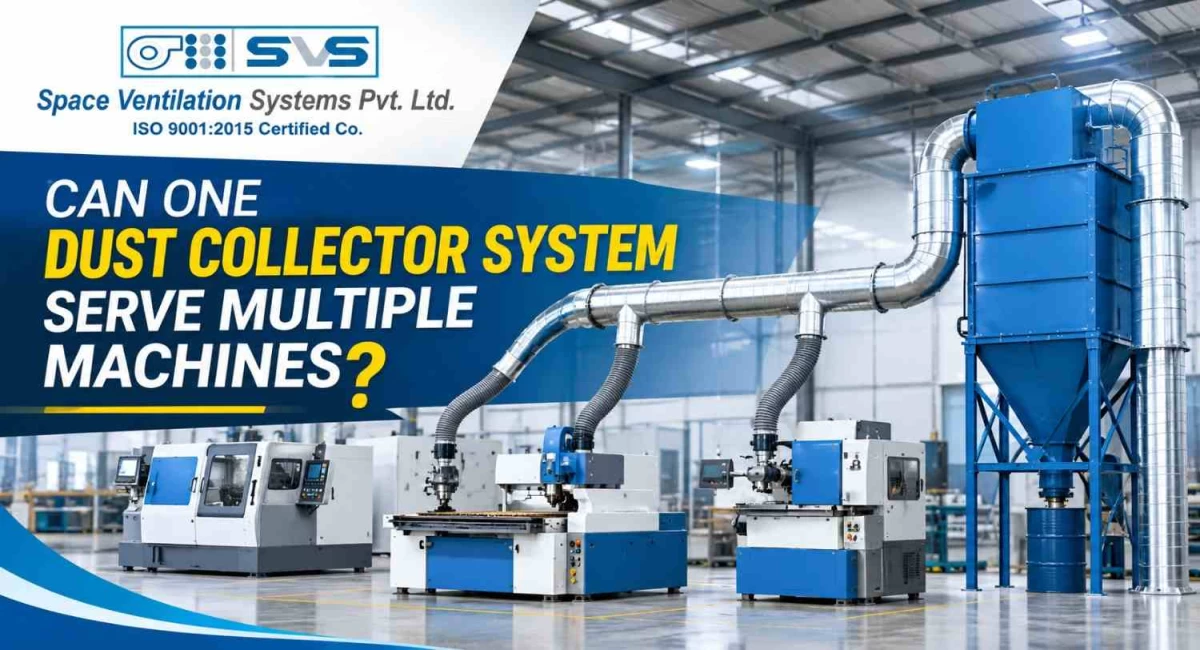
Can One Dust Collector System Serve Multiple Machines?
Quick Highlights
- One central collector can serve several machines.
- Total airflow decides the number of connected machines.
- Duct size affects suction across every branch.
- Dampers help control airflow between different machines.
- Filters must handle the combined dust load.
- Regular checks help prevent blockages and weak suction.
- Separate units may suit machines with different dust types.
Can one industrial dust collector system handle dust from multiple machines at the same time? Yes, it can serve multiple machines if its capacity, airflow, duct size, and filter setup match the total dust load. This setup is common in factories and workshops where several machines produce dust during daily operations.
However, connecting several machines to one collector needs proper planning. Each machine may produce a different amount of dust. Some machines also need stronger airflow than others.
A poorly planned system may fail to collect dust from every machine. It can also cause low suction, blocked ducts, and extra pressure on the collector.
So, how do you know if one system can handle your entire production area?
As one of the best dust collector system manufacturers, we are here to answer this very useful question -
How Can One Industrial Dust Collector System Serve Multiple Machines?
It can collect dust from several machines through a shared network of ducts. Each machine connects to the main duct through a separate branch.
This setup allows factories to use one central dust collection unit instead of separate collectors for each machine.
What Factors Decide How Many Machines One Dust Collector Can Handle?
The number of machines depends on the collector's capacity and the total airflow requirement. It cannot serve unlimited machines just because they share one duct network.
You need to check several technical points before selecting a system -
Total airflow requirement
Every machine needs a certain amount of air to remove dust. This requirement usually appears in cubic feet per minute (CFM) or cubic metres per hour.
Dust type and particle size
Different machines produce different types of dust. Wood chips, metal particles, cement dust, and plastic powder need different collection methods.
Duct size and length
The duct network must carry the required airflow without excessive resistance. Long ducts, sharp bends, and narrow pipes can reduce airflow.
Number of operating machines
The system must match the actual operating pattern of the factory. Five machines may not need full airflow at the same time if only three operate together.
Filter capacity
Filters must handle the dust load from all connected machines. A small filter area can cause faster filter blockage and higher-pressure loss.
How Should You Design a Central Dust Collection System?
It needs a planned duct network and a clear understanding of machine requirements. The design should start with the machines, not just the collector size.
Follow these steps before installation.
List all machines
Prepare a list of machines that need dust collection. Record their type, dust output, operating hours, and airflow needs.
Check machine airflow needs
Find the airflow requirement for each machine. Check the manufacturer's technical details if available.
Do not assume that machines of the same size need equal airflow. Their dust output and collection points may differ.
Plan the duct network
Decide where the main duct and branch ducts will run. Keep duct routes as direct as possible.
Avoid unnecessary bends and sudden changes in pipe size. These can increase airflow resistance.
Select suitable dampers
Dampers help control airflow through different branches. Operators can close a branch when its machine is not in use.
This can direct more air towards machines that need collection at that time. Automatic dampers can also work with machine controls.
Choose the right collector
Select a collector that matches the total airflow and dust load. Check its filter area, fan capacity, dust handling capacity, and cleaning method.
Test the complete system
Check airflow at each machine after installation. Look for dust leaks, weak suction, and pressure changes.
What Problems Can Occur When One Dust Collector Serves Multiple Machines?
A shared dust collector can develop problems if its design does not match the factory's needs. These problems usually affect airflow, dust removal, and filter performance.
The common issues include -
- Too many open branches can reduce airflow at individual machines.
- Poor duct size or low air speed can allow dust to settle inside pipes.
- High dust loads can increase filter cleaning needs.
- Some machines may receive more air than others.
- A wrongly selected fan may struggle to meet the system's airflow demand.
- Loose joints and damaged ducts can release dust into the work area.
When Should You Choose One Central Dust Collector Instead of Separate Units?
It works well when several machines operate within the same factory area. It can also suit production units with a planned duct network and a shared dust handling requirement.
However, separate collectors may be a better choice in certain situations.
A central system may suit your factory if -
- Several machines produce similar types of dust.
- The machines operate within a common production area.
- A shared duct network can reach all collection points.
- The total airflow requirement fits one collector.
- The factory has space for a central collection unit.
Separate dust collectors may suit your factory if -
- Machines produce different types of dust.
- Some materials need special filters or handling.
- Machines operate in separate buildings or distant areas.
- One machine has a very high dust load.
- A shared duct network would be difficult to maintain.
Last Words
As a leading manufacturer of industrial scrubber systems, we understand one industrial dust collector system can serve multiple machines through a shared duct network. However, its airflow, fan capacity, filter area, and dust handling capacity must match the total demand. Proper duct design, dampers, and regular checks also matter. Always assess machine requirements before choosing a central or separate collection system.