

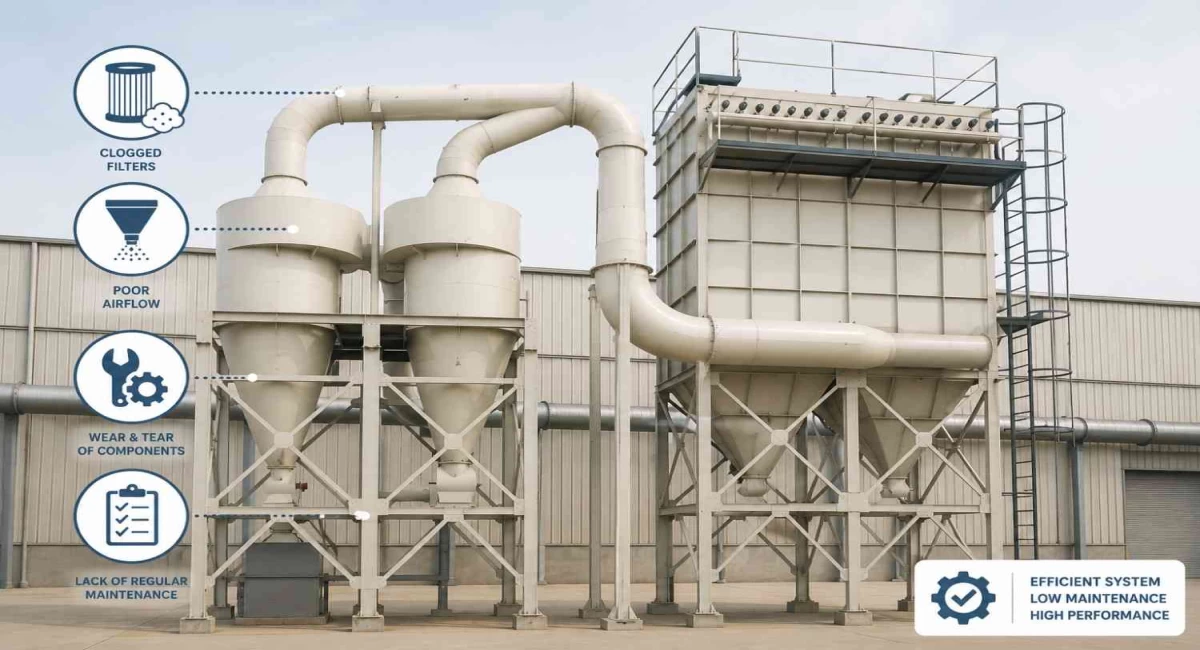
How To Solve High Maintenance Issues In Cyclone Dust Collectors?
Key Takeaway
- Inspect the cyclone dust collector regularly to identify problems early.
- Maintain proper airflow to reduce wear and improve dust collection.
- Clean hoppers and ducts to prevent dust buildup and blockages.
- Replace worn parts before they cause larger equipment failures.
- Follow a scheduled maintenance plan throughout the year.
- Install and operate the system according to its design limits.
- Train operators to identify warning signs and report issues quickly.
Do you struggle with frequent repairs and high maintenance costs in your cyclone dust collector? Many industries face this problem after months or years of regular use.
The good news is that you can reduce maintenance issues by following the right inspection, cleaning, and operating practices suggested by cyclone dust collector manufacturers.
How does cyclone dust collector work?
A cyclone dust collector removes dust from air by using centrifugal force. It works without filters, which makes it simpler than many other dust collection systems.
Even so, poor maintenance, incorrect installation, or harsh operating conditions can reduce its performance.
Why Do Cyclone Dust Collectors Need Frequent Maintenance?
High maintenance usually happens because the system operates under difficult conditions. Dust particles move at high speed inside the cyclone. Over time, they wear down important parts. If you ignore small problems, they can turn into costly repairs.
Some industries also use cyclone dust collectors with dust that contains moisture, sticky materials, or abrasive particles.
Common reasons for high maintenance include:
- Poor installation
- Incorrect airflow
- Heavy dust loading
- Worn internal parts
- Lack of regular inspections
- Delayed cleaning schedules
How Can Regular Inspection Reduce Maintenance Problems?
Regular inspection is one of the easiest ways to prevent unexpected breakdowns. A planned inspection helps you identify small issues before they become serious.
Check the outer body for cracks, dents, or signs of corrosion. Look at the inlet and outlet sections for damage. Examine joints and seals to make sure air does not leak from the system.
You should also inspect:
- Dust discharge valves
- Support structures
- Collection hopper
- Duct connections
- Fan performance
- Fasteners and bolts
How Do You Prevent Wear and Tear Inside a Cyclone Dust Collector?
Wear is one of the most common maintenance issues. Dust particles hit the cyclone walls at high speed every day. Hard and abrasive dust can slowly damage the metal surface.
You can reduce wear by choosing materials that match your application. Some cyclone dust collectors use wear-resistant liners or thicker steel in areas that receive the highest impact.
You should also:
- Avoid running the system above its design capacity.
- Replace damaged liners without delay.
- Inspect high-wear areas regularly.
- Remove abrasive material buildup during maintenance.
Why Is Proper Airflow Important for Lower Maintenance?
Correct airflow keeps the cyclone dust collector working efficiently. Too much airflow increases internal wear. Low airflow reduces dust separation and allows dust to settle inside the system.
Check airflow regularly with suitable measuring instruments. Compare the readings with the manufacturer's recommended values.
Signs of airflow problems include:
- Poor dust collection
- Higher energy use
- Excessive vibration
- Dust escaping from outlets
- Increased equipment wear
How Can You Prevent Dust Build Up and Blockages?
Dust buildup is another common reason for high maintenance. Fine dust, sticky materials, or moisture can create blockages inside the cyclone or hopper.
A blocked hopper prevents proper dust discharge. Dust starts collecting inside the cyclone instead of moving into the collection container.
You can prevent blockages by following these practices:
- Empty collection bins before they become full.
- Keep the dust discharge valve working properly.
- Remove sticky deposits during scheduled cleaning.
- Prevent moisture from entering the system whenever possible.
- Inspect the hopper for material buildup.
How Does Correct Installation Help Reduce Maintenance?
Proper installation has a direct effect on the life of a cyclone dust collector. A poorly installed system often develops vibration, air leakage, and uneven dust flow.
The cyclone should stand on a stable support structure. All duct connections should fit correctly. Air leaks reduce collection efficiency and increase operating problems.
During installation, make sure:
- The cyclone remains level.
- Duct sizes match the system design.
- Support frames remain secure.
- Access points stay easy to reach.
- The discharge system works smoothly.
What Maintenance Schedule Should You Follow?
A planned maintenance schedule keeps the cyclone dust collector in good condition throughout the year. Daily checks take only a few minutes, but they help prevent expensive repairs later.
Daily Maintenance
- Check for unusual noise.
- Look for dust leakage.
- Empty collection bins if required.
- Observe airflow performance.
Weekly Maintenance
- Inspect ducts.
- Check fasteners.
- Examine discharge valves.
- Remove visible dust buildup.
Monthly Maintenance
- Inspect internal wear.
- Check fan condition.
- Test airflow.
- Inspect structural supports.
Annual Maintenance
- Perform a complete system inspection.
- Replace worn components.
- Check alignment.
- Inspect protective coatings.
- Review maintenance records.
What Are the Warning Signs That Need Immediate Attention?
Some problems require immediate action. Ignoring these warning signs can lead to major repairs.
Watch for these symptoms:
- Excessive vibration
- Loud operating noise
- Reduced dust collection
- Visible air leaks
- Dust escaping into the workplace
- Frequent blockages
- Rust or corrosion
- Damaged inlet or outlet sections
How Can Good Operating Practices Lower Maintenance Costs?
Good operating habits help prevent many common maintenance problems. Operators should understand how the cyclone dust collector works and follow standard operating procedures.
Do not overload the system with more dust than it can handle. Avoid processing materials that the equipment was not designed for.
Simple operating practices include:
- Start and stop the system correctly.
- Keep inspection schedules consistent.
- Report problems immediately.
- Replace worn parts early.
- Keep maintenance records updated.
Final Answer
A cyclone dust collector can provide reliable dust collection for many years when you maintain it properly. Regular inspections, correct airflow, timely cleaning, and early repairs help reduce maintenance problems and improve performance. A planned maintenance routine keeps the system running safely, lowers repair costs, and increases the equipment's service life.